
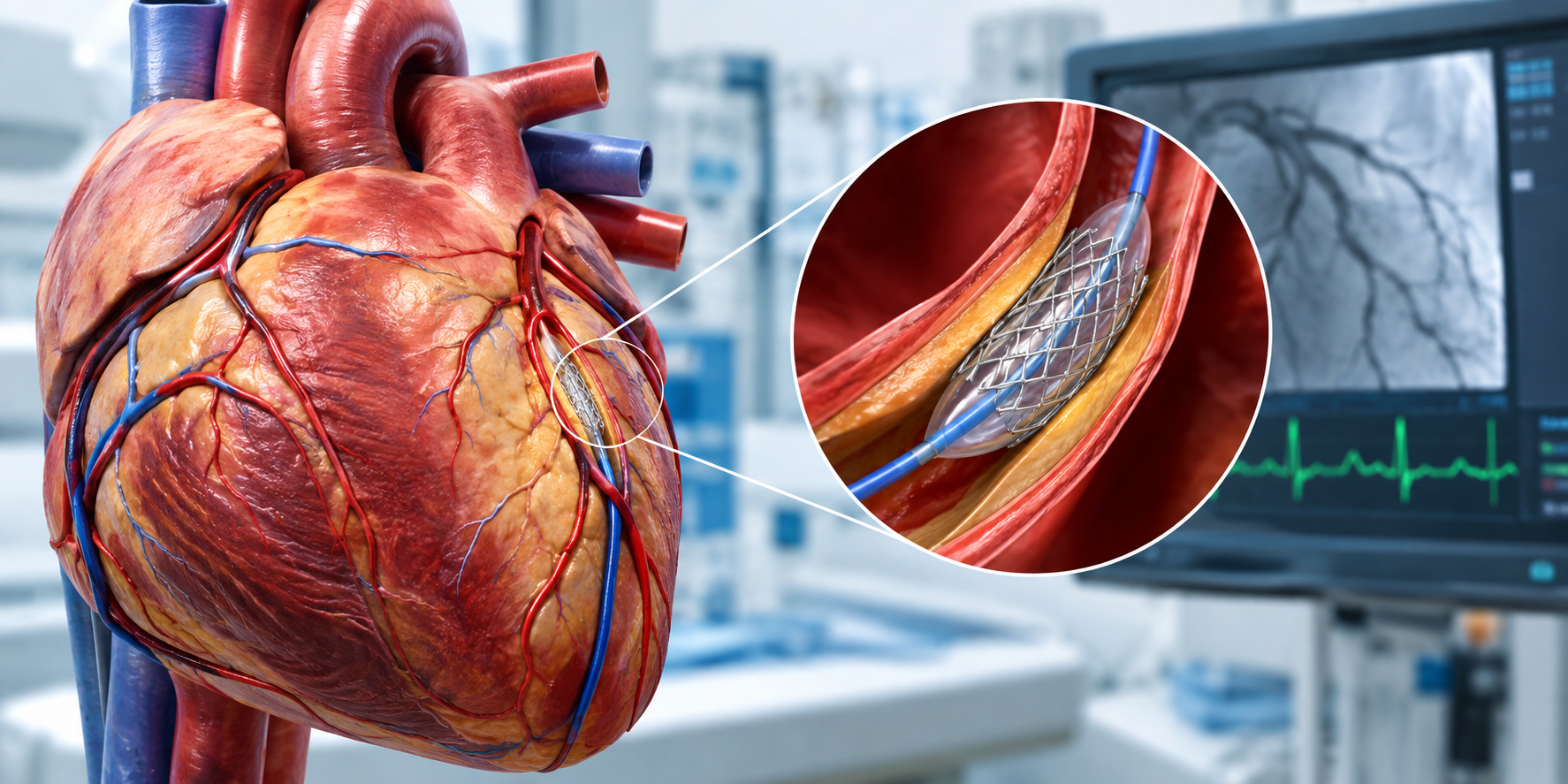
If you have been experiencing chest discomfort, have been diagnosed with coronary artery disease, or have been referred for further heart investigations, you may have heard the term interventional cardiology.
Interventional cardiology is a specialised area of cardiology involving catheter-based procedures that can be used to investigate and, when appropriate, treat certain cardiovascular conditions. Procedures may include coronary angiography, coronary angioplasty and stent insertion.
For people searching for interventional cardiology in Cleveland, Capalaba, Redland Bay, Victoria Point or Mount Cotton, understanding what these procedures involve can help you prepare for a discussion with your GP or cardiologist.
Interventional cardiology uses thin, flexible tubes called catheters to access blood vessels and reach the heart or coronary arteries. These procedures can help doctors investigate blood flow and identify narrowing or blockages in the coronary arteries.
One commonly performed investigation is a coronary angiogram. It uses X-rays and contrast dye to create images of the coronary arteries and can show whether arteries are narrowed or blocked. A coronary angiogram may also be referred to as cardiac catheterisation.
In some circumstances, an interventional procedure can be performed during the same hospital visit. For example, if a significant narrowing is identified during coronary angiography, the treating team may consider coronary angioplasty and, where appropriate, stent insertion.
The decision depends on the individual patient’s symptoms, test results, medical history and overall clinical circumstances.
A coronary procedure may be considered when there is evidence of reduced blood flow to the heart or a problem affecting the coronary arteries.
Some situations in which further investigation or intervention may be considered include:
Not everyone with coronary artery disease will require an interventional procedure. Treatment may involve lifestyle changes, medicines, monitoring, further testing or another treatment approach, depending on the individual circumstances.
Coronary artery disease, also known as coronary heart disease, occurs when plaque builds up in the arteries that supply blood to the heart muscle. This can gradually narrow the arteries and reduce blood flow.
Risk factors can include high blood pressure, high cholesterol, diabetes, smoking, physical inactivity and family history, among others.
Some people may not have obvious symptoms until coronary artery disease causes angina or a heart attack. This is why cardiovascular risk assessment and appropriate investigation can be important, particularly for people with relevant risk factors or symptoms.
If you are looking for a coronary artery procedure in Cleveland or discussing possible coronary disease with a cardiologist in the Redlands area, your doctor can assess whether further testing is appropriate.
A coronary angiogram is an imaging test used to examine the coronary arteries.
During the procedure, a healthcare professional inserts a small tube into an artery, usually through the wrist or groin. A catheter is then carefully guided towards the heart.
Contrast dye is injected through the catheter while X-ray images are taken. The dye helps the coronary arteries show up on the images, allowing the treating team to assess blood flow and identify areas of narrowing or blockage.
A coronary angiogram is generally performed in a hospital or specialised facility with a cardiac catheter laboratory.
The procedure itself commonly takes around 30 minutes to an hour, although the overall time at the hospital can be longer because of preparation and recovery.
For patients searching for heart catheterisation in Alexandra Hills, it is important to understand that cardiac catheterisation is a broader term for procedures involving catheter access to the heart or its blood vessels. Your cardiologist can explain exactly which investigation or procedure has been recommended.
If a coronary artery is significantly narrowed or blocked, coronary angioplasty may be considered in appropriate circumstances.
Coronary angioplasty is also known as percutaneous coronary intervention (PCI). During the procedure, a catheter with a small balloon is guided towards the narrowed section of the coronary artery. The balloon is inflated to help widen the artery and improve blood flow.
A stent may also be inserted. A stent is a small mesh tube that helps keep the treated section of the artery open.
Coronary angioplasty is used in certain situations involving coronary heart disease, angina and acute coronary syndromes, including some heart attacks.
If you are researching coronary angioplasty in Redlands, your cardiologist can explain whether this type of procedure is relevant to your particular condition.
No.
Having a narrowed coronary artery does not automatically mean that a stent is required.
Your cardiologist may consider several factors, including:
The Heart Foundation notes that treatment for coronary heart disease can include medicines, PCI or coronary artery bypass graft surgery, depending on the person’s circumstances.
This means that the presence of coronary artery disease does not by itself determine which treatment is appropriate.
A heart attack requires urgent medical assessment and treatment.
In certain types of acute coronary syndrome, percutaneous coronary intervention (PCI) may be used to restore blood flow through a blocked coronary artery. Australia’s current acute coronary syndromes guideline provides recommendations for assessment and management, including the timing of PCI for eligible patients with certain types of heart attack.
If you experience symptoms that could indicate a heart attack, such as sudden chest pain or pressure, difficulty breathing, sweating, nausea or discomfort that spreads to the arm, jaw, shoulder or back, call Triple Zero (000) immediately.
Do not wait for a routine cardiology appointment when symptoms may represent a medical emergency.
A GP may refer you to a cardiologist if you have symptoms, cardiovascular risk factors or test results that require specialist assessment.
A cardiologist may recommend investigations such as an ECG, echocardiogram, stress testing, CT coronary angiography or coronary angiography depending on the clinical situation. Different tests provide different information, so the appropriate investigation varies between patients.
If you are searching for an interventional cardiologist in Alexandra Hills or an interventional cardiologist in Cleveland, a referral and specialist assessment can help determine whether further investigation is appropriate.
People living in Capalaba, Redland Bay, Victoria Point and Mount Cotton may also access cardiology services in the wider Redlands and Brisbane Bayside region.
For patients looking for cardiology in Brisbane Bayside, specialist assessment may be appropriate when symptoms or investigations suggest a possible cardiovascular condition.
BK Heart Centre is located in Alexandra Hills and provides cardiology services for patients in the surrounding Redlands and Brisbane Bayside region.
If your GP has recommended cardiology assessment, you can discuss your symptoms, medical history and any previous test results with your cardiologist. They can then explain whether further investigations or a coronary procedure may be appropriate.